Dr. Gymbro
←

#supplement research

1 article
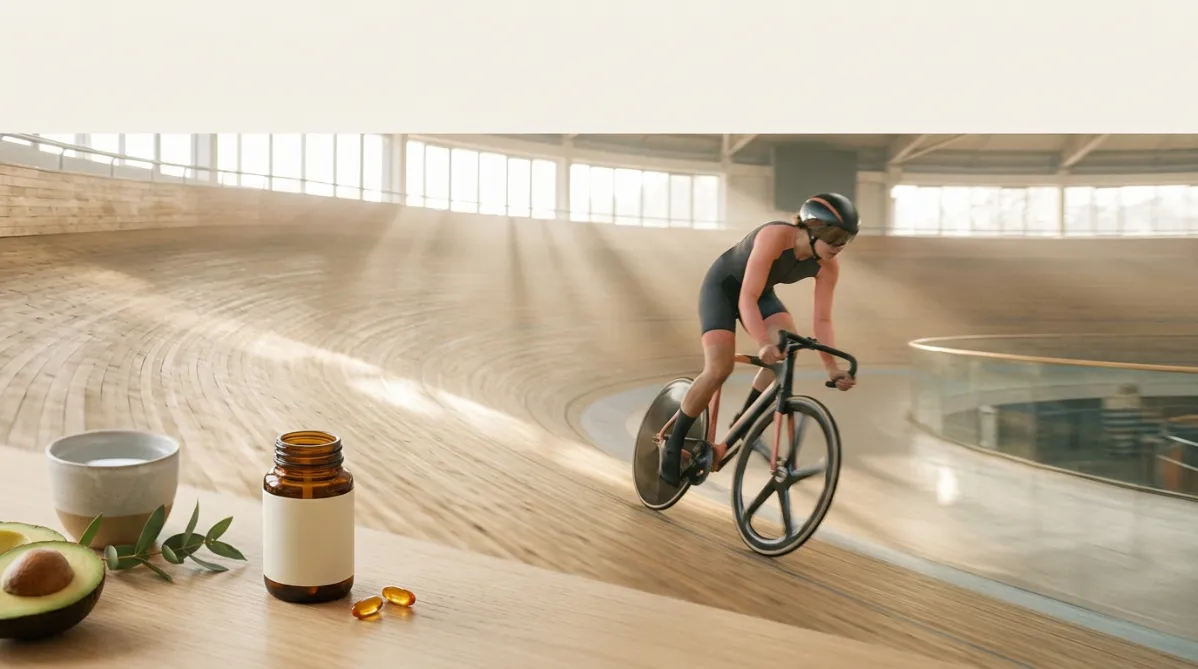
A wide, editorial-style photograph of a professional track cyclist mid-stride on a velodrome's sloping wooden boards, captured from a low side angle with a shallow depth of field. The cyclist is in a sleek matte charcoal and soft coral skinsuit with an aerodynamic helmet, slightly motion-blurred, while the wood grain of the track glows in warm honey tones. Soft morning light streams through high arena windows, creating long, gentle beams and a subtle haze.

In the foreground, slightly out of focus, a minimalist still-life is arranged on a pale oak surface: a small amber glass supplement bottle with a clean cream label, two golden-orange softgel capsules resting beside it, and a ceramic cup of water. A small sprig of green leaves and a halved avocado add a fresh, natural touch, hinting at taking the supplement with fat. The composition places the still-life in the lower left third, with the cyclist blurring into the background on the right, creating a layered sense of depth.

The color palette is warm and refined: creamy off-white, honey wood, muted coral, soft amber, and touches of sage green. A thin, elegant overlay of subtle graph-like lines, such as two delicate rising curves in white, one slightly higher than the other, floats faintly over the upper right negative space, suggesting the small performance gap without any text or numbers. The overall look is clean, modern, and magazine-quality, like a wellness and sports science journal feature, with natural film-like grain, soft contrast, and generous negative space at the top for headline placement. Landscape 16:9 composition, calm and sophisticated mood, no text, no logos.
nutrition

Esperanças Olímpicas Tomaram 300 mg de Ubiquinol: A Vantagem de 2,5% de Potência

BY DR. GYMBRO ·

Em um estudo duplo‑cego com 100 atletas que se preparavam para as Olimpíadas de Londres 2012, todos melhoraram o desempenho na bicicleta, mas o grupo que recebeu 300 mg de ubiquinol teve um ganho maior: +11 % versus +8,5 % no placebo. A diferença de cerca de 2,5 % foi estatisticamente significativa, embora o estudo apresente limitações (treinamento não controlado e vínculo com a indústria). Neste artigo explicamos a diferença entre ubiquinol e ubiquinona, interpretamos os números e analisamos se essa vantagem vale a pena para um ciclista de elite, mas não para um praticante recreativo de musculação. Também abordamos dosagem, horário com gordura, necessidade de orientação médica e custo‑benefício.

This page is available in